I'm certain there's no compelling reason to sit around idly influencing you that catchphrase research is one of the most elevated return SEO exercises that is fundamental for your advertising achievement.
There's likewise no lack of extraordinary articles that give you itemized guidelines as to executing an expert catchphrase inquire about, positioning high for a large number of focused hunt terms and incomprehensibly improving your traffic from Google.

Be that as it may, here's an intriguing perception: every one of these aides will give you a to some degree distinctive arrangement of guidelines.
Not unreasonably any of them is exhorting you wrong, it's simply there's no all inclusive way to deal with executing watchword investigate.
It will fluctuate dependent on:
This is the reason you may think that its difficult to identify with an irregular well ordered guide that you unearth.
So I'm going to take an alternate course and give you a watchword inquire about system that can be effectively changed in accordance with whatever your objectives and assets are.
Furthermore, I ensure that the strategies and techniques portrayed underneath will boundlessly improve your traffic from Google.
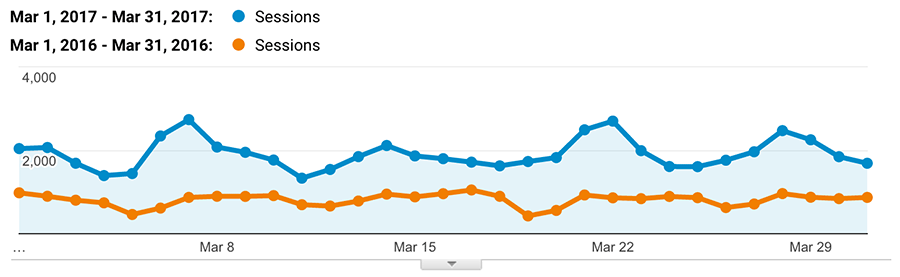
In any event we've developed pursuit traffic to this very blog by 2.4x in one year by doing it:
Seed watchwords are the establishment of your catchphrase look into. They characterize your specialty and help you recognize your rivals.
On the off chance that you as of now have an item or business that you need to advance web based, concocting seed catchphrases is as simple as portraying that item with your very own words or conceptualizing how other individuals may scan for it.
For instance, suppose you're propelling an online store with GoPro adornments. The Google look (catchphrases) that you would initially consider are:
GoPro adornments;
devices for GoPro;
GoPro additional items.
That is an easy decision, isn't that so?
However, imagine a scenario in which you're hoping to begin a subsidiary showcasing site, and you have no clue which specialty to pick or which items to advance.
The test of "picking a specialty" merits a major and point by point guide of its own. Be that as it may, for the most part, there are two different ways to approach this:
Begin from investigating accessible monetisation strategies. Pick an item or an offer that you like. And afterward consider search inquiries that individuals may utilize discover it in Google.
For instance, Amazon has an amazingly famous offshoot program. So you should simply peruse their site until you find an item (or a class of items) that you're willing to advance.
Another choice is to scout offshoot commercial center locales like ClickBank or CJ, that associate item proprietors with members.
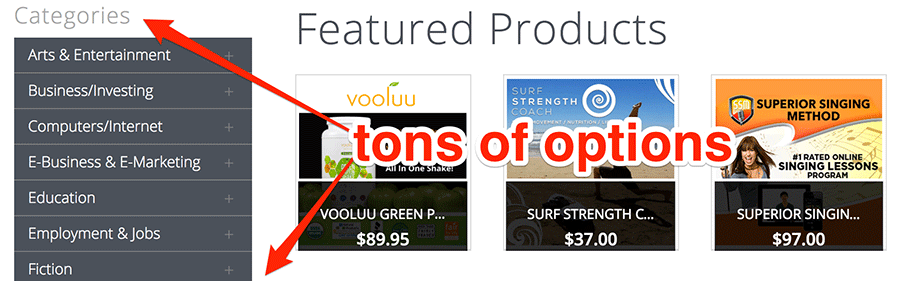
Lastly, simply survey the items and administrations that you're utilizing yourself and check whether you can turn into a subsidiary.
You can begin with an overly expansive catchphrase and specialty down until you see an intriguing chance.
For instance, I'm going to pick "music" as my too expansive specialty. Ahrefs' Keywords Explorer instrument gives me very nearly 5 million watchword thoughts for that seed catchphrase:
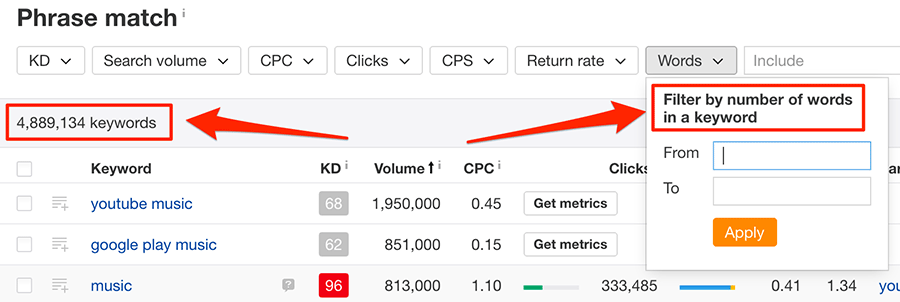
So as to "specialty down," I have to concentrate on longer and increasingly explicit catchphrases that have "music" in them. So I will utilize the "Words" channel to limit that enormous rundown of catchphrase thoughts to those with precisely 4 words.
What's more, this is what I had the option to discover:
These specialty thoughts are clearly a long way from flawless, however hello, I spent close to 5 minutes to discover them. Contribute somewhat additional time and you'll definitely unearth something great.
So you have your seed catchphrases made sense of. In any case, that is just the tip of the catchphrase investigate chunk of ice.
The subsequent stage is to create a mammoth rundown of applicable watchword thoughts, while likewise getting a decent comprehension of what individuals in your specialty are looking for in Google.
There are at any rate four great approaches to do it.
In the event that you claim a site that has been around for some time, you should as of now be positioning in Google for a couple of hundred watchwords. Realizing what they are is an ideal method to kick-begin your watchword investigate.
A decent wellspring of this data is a report called "Search Analytics" in Google Search Console:
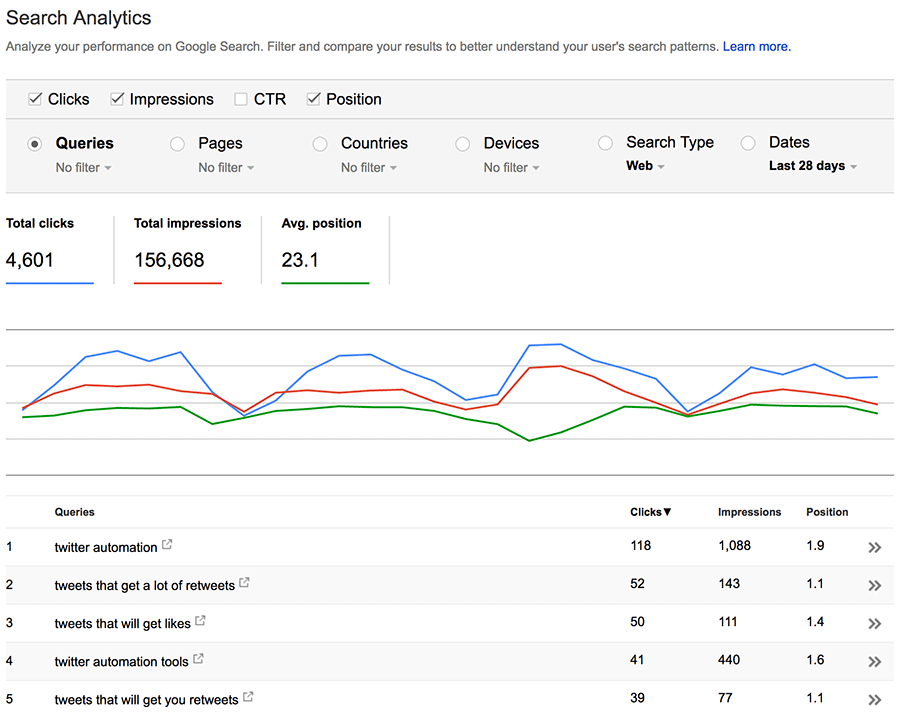
Search Console demonstrates your normal position for every one of the catchphrases you rank for and what number of impressions and snaps this brings you. Be that as it may, they don't demonstrate the month to month search volume and you're constrained to 1000 catchphrases as it were.

The odds are, your rivals have just played out all the dull catchphrase research work for you. So you can look into the catchphrases that they rank for and single out the best ones.
On the off chance that you don't have the foggiest idea who your rivals are, simply put your seed catchphrases into Google and see who positions on the first page.
We should do that with a seed watchword that I found before, "presents for music darlings." I see a fascinating site positioning on the first page, uncommongoods.com.
How about we presently plug that site in Ahrefs' Site Explorer and peruse the watchwords that it positions for:
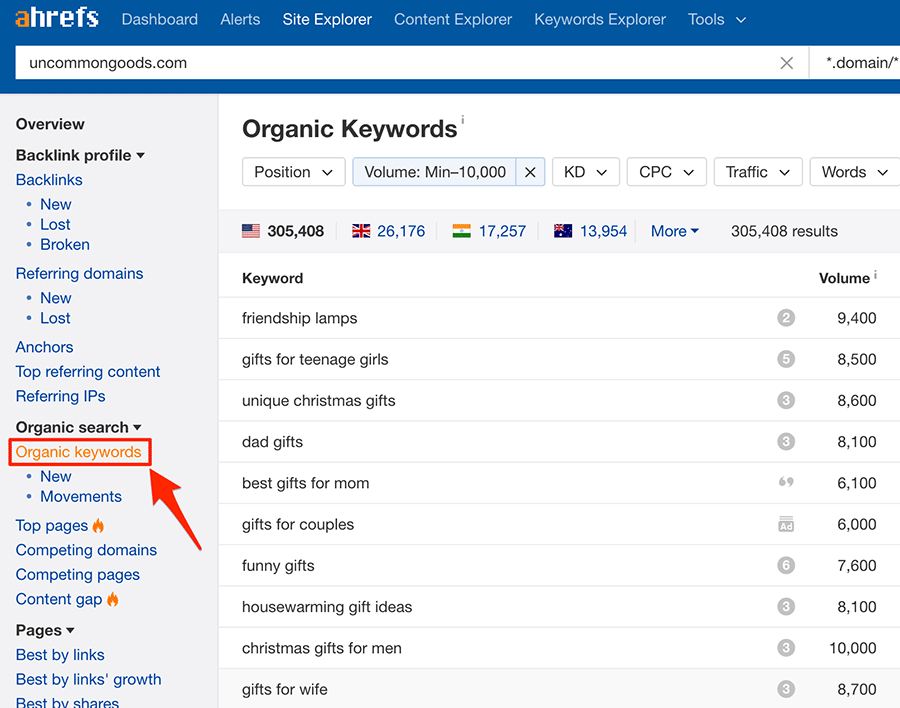
At times even a solitary contender can supply you with enough catchphrase thoughts to keep your SEO group occupied for a considerable length of time. Be that as it may, in case you're ravenous for additional, you can go to "Contending spaces" report to discover more locales like your rival.
Also, we've quite recently shut the "focused research circle":
The secret to practically boundless catchphrase thoughts is to rehash this procedure again and again.
What's more, don't disregard taking advantage of related businesses. You may find a ton of incredible catchphrases that don't really identify with whatever you're offering however can in any case carry very focused on guests to your site.
Yet, in case you're one of the pioneers in your specialty, that methodology isn't exactly achievable for you. You must search for some exceptional watchwords that none of your rivals are focusing on yet.
Furthermore, the most ideal approach to do it is by utilizing an OK watchword research device. Fortunately, there's no lack of them available:
Notwithstanding the instrument you pick, there's no favored work process for discovering incredible watchword thoughts. Simply enter your seed watchwords and play with the reports and channels until you discover something cool.
Most devices will pull their watchword recommendations from the accompanying sources:
These techniques are incredible, however they can once in a while give you in excess of two or three hundred proposals. For instance, UberSuggest demonstrates just 316 watchword thoughts for "content promoting."
There are likewise best in class watchword research apparatuses (Ahrefs, Moz, SEMrush) that work their very own catchphrase database and in this way will give you tremendously more watchword thoughts.
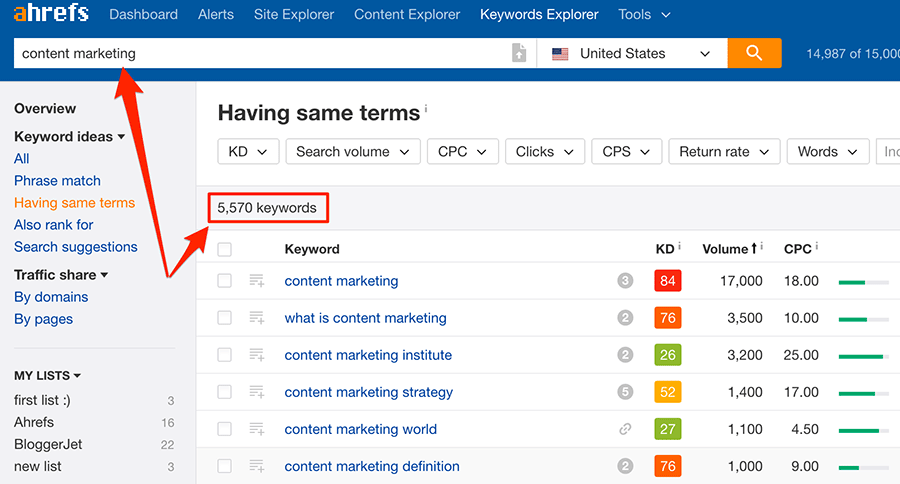
You can without much of a stretch go bananas attempting to filter through a catchphrase rundown of that size, so we have some incredible separating alternatives set up:
On the off chance that you need to get familiar with producing watchword thoughts by means of Ahrefs' Keywords Explorer, look at my full survey of this device.
RECOMMENDATION
"Google Keyword Planner is the most horrible apparatus that you can use for producing watchword thoughts. That is on the grounds that it is appropriate for promoters, not SEOs. Test GKP against some other watchword research instrument and you'll perceive how restricted their catchphrase recommendations are."
The previously mentioned catchphrase look into methodologies are incredibly powerful and give a practically boundless measure of watchword thoughts. And yet, they sort of keep you "in the crate."
Once in a while, just by examining your specialty well (and including a touch of presence of mind), you can find some extraordinary watchwords that nobody in your specialty is focusing on yet.
Here's the manner by which to kickstart "out of the case" thinking:
For instance, in case you're selling waterproof earphones, here are a portion of the "out of the crate" catchphrases you may take a stab at focusing on:
Individuals scanning for these things are not really hoping to purchase waterproof earphones, yet they ought to be genuinely simple to offer to.
We as of late composed a quite definite article about this catchphrase explore system: 4 Ways to Find Untapped Keyword Ideas With Great Traffic Potential.
What's more, I truly appreciated the counsel offered by Dan Petrovic here: Advanced New Tail Keyword Research.
What's more, to enable you to isolate the good product from the debris, there's a lot of cool watchword measurements to consider.
This measurement demonstrates to you the general hunt request of a given watchword, i.e., how often individuals around the globe (or in a particular nation) put this catchphrase into Google.
The greater part of the catchphrase research instruments pull their Search volume numbers from Google AdWords, which was for some time viewed as a confided in wellspring of this information.
In any case, not any longer. For as long as couple of years, Google has been reliably removing information from SEOs:
In any case, this time, we had the option to pull off a cool workaround – clickstream information.
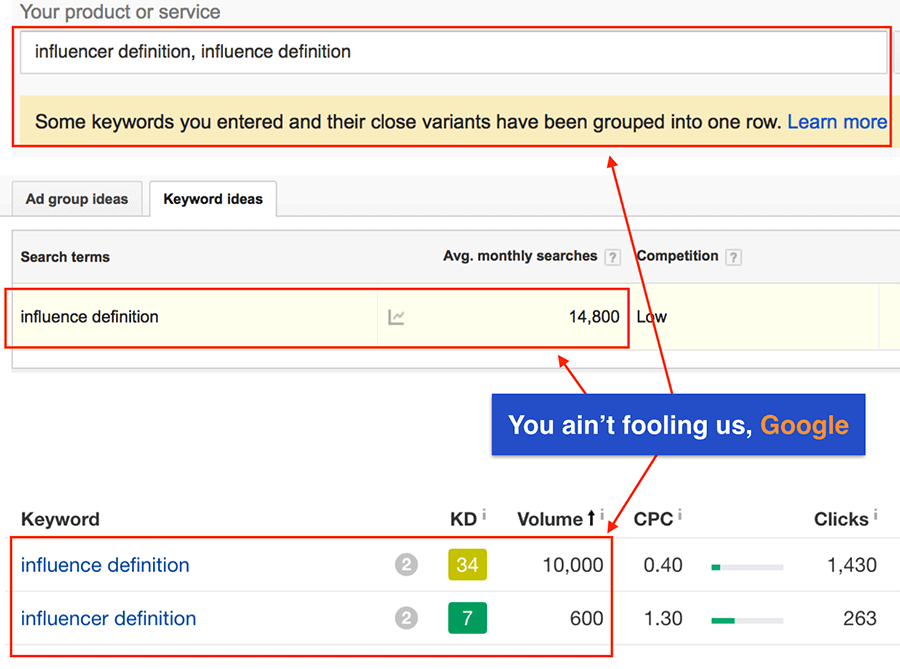
By displaying numbers from GKP against clickstream information, we're ready to concoct substantially more exact pursuit volumes and un-bunch watchwords that have comparable significance.
Something else to consistently remember is the dynamic idea of Search volume.
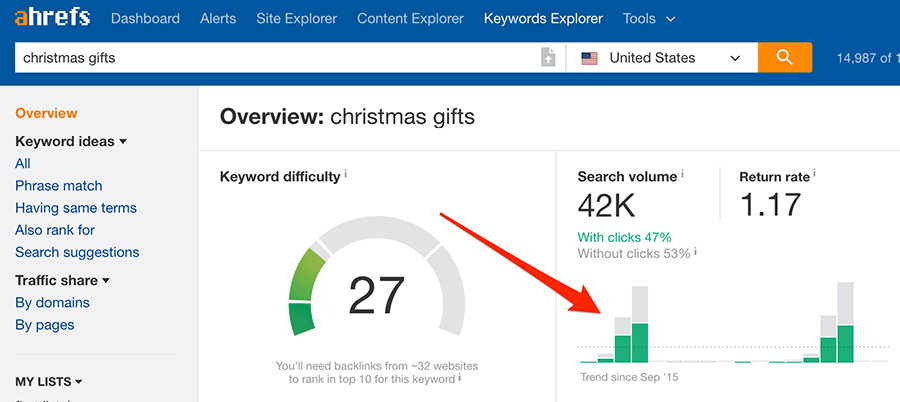
For instance, a catchphrase like "christmas presents" will normally spike around Christmas time while having just about zero hunt volume during the remainder of the year.
To check the pursuit volume pattern of a catchphrase you can utilize a free instrument called Google Trends:
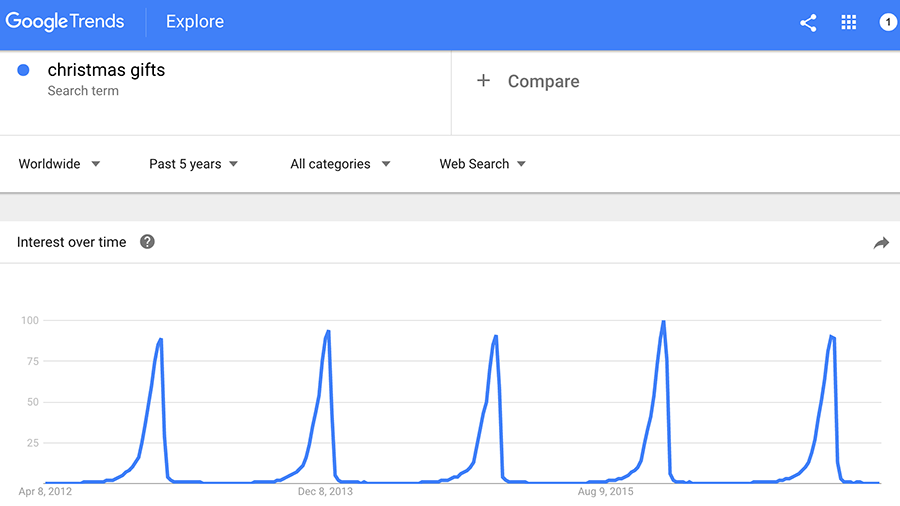
So the pursuit volume is essentially a yearly normal. Furthermore, in case you're in uncertainty about the "regularity" of a catchphrase, make a point to check the patterns.
Be that as it may, there's one issue with pursuit volume. It doesn't in every case precisely foresee the inquiry traffic.
We should take a watchword, "donald trump age," that has a hunt volume of 246,000 pursuits for every month (as per Google Keyword Planner).
That colossal hunt request infers that you should get a huge measure of traffic on the off chance that you rank at the highest point of Google for that watchword. Be that as it may, we should perceive what the list items resemble:

A decent amount of Google's land is taken by a moment answer to that search question: 70 years.
So does it at any point bode well to click anything now?
Not a chance:
These "extraordinary" query items are known as "SERP highlights" and there are many various kinds of them:
Some of them will inconceivably improve search traffic to your site, yet others will take it away from you.
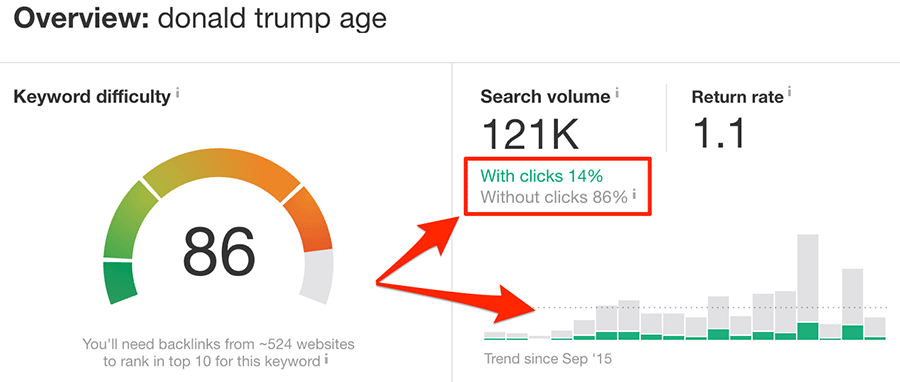
On the above screen capture from Ahrefs' Keywords Explorer, you can see that 86% of scans for "donald trump age" don't bring about any snaps on the query items. All since searchers are given a moment answer through a Knowledge card.
The Clicks metric is absolutely priceless in getting rid of the hunt questions with enormous inquiry request however hopeless traffic. Also, we're glad to be the main instrument available to have this measurement.
We're likewise ready to demonstrate to you what number of the snaps get "stolen" via search promotions:
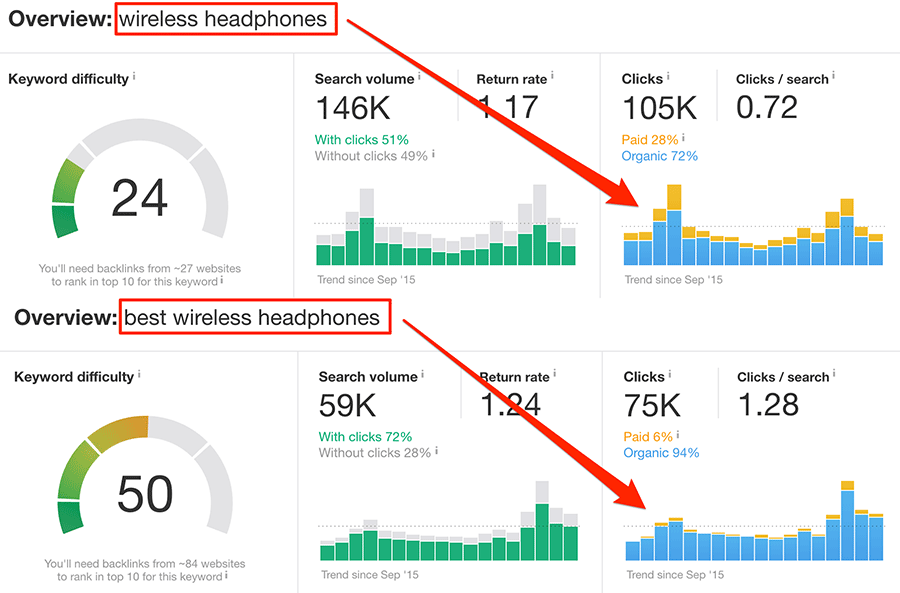
On the above screen capture, you can see that a decent amount of snaps for "remote earphones" go to look through promotions, while clicks for "best remote earphones" are for the most part natural.
Search volume and Clicks are incredible measurements to comprehend the prevalence and traffic of a solitary catchphrase. However, that catchphrase may have a huge amount of equivalent words and related pursuits, which can all be focused with a solitary page on your site.
Give me a chance to clarify what I mean with a model. The watchword "I'm sorry blooms" doesn't look encouraging as far as hunt request or traffic:
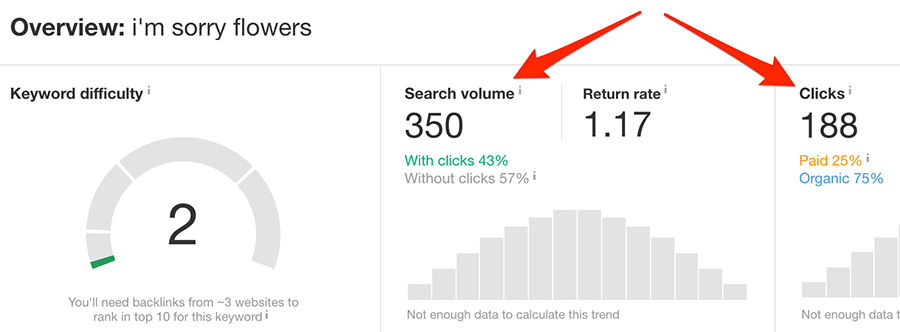
The #1 positioning outcome typically gets close to 30% everything being equal. This implies you can seek after around 60 visits for each month on the off chance that you rank #1 for the watchword "I'm sorry blooms."
Also, that is somewhat of a demoralizing projection, correct?
Be that as it may, how about we take a gander at how much inquiry traffic the #1 positioning page for "I'm sorry blooms" watchword really gets:
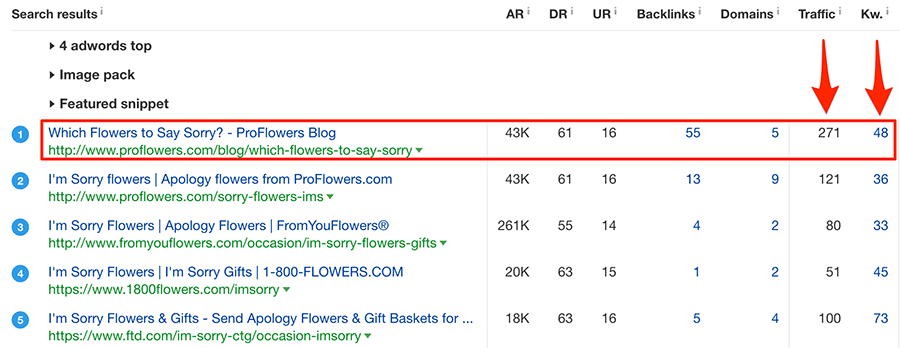
On the above screen capture, you can see that it is pulling in right around 300 guests from Google for every month. That is on the grounds that it positions for 48 distinct catchphrases, and not simply "I'm sorry blossoms" watchword alone.
We've been supporting the significance of long-tail traffic for a long time (here, here, and here), yet it doesn't damage to pressure it once more.
Individuals look for very similar things in a wide range of curious ways. So a solitary page on your site can possibly rank for hundreds (if not thousands) of related watchwords.
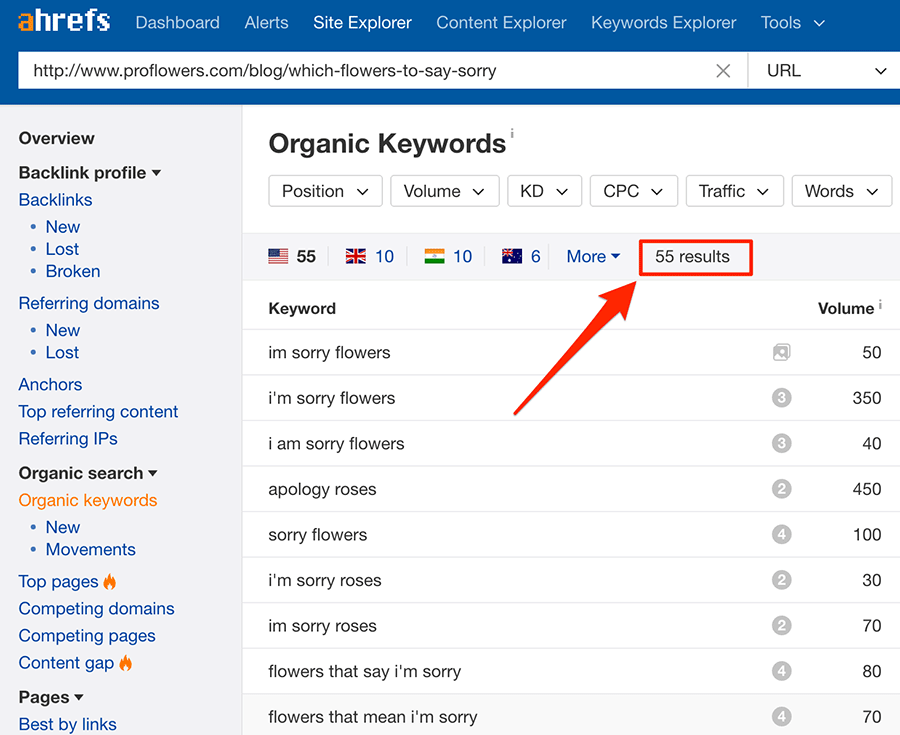
So it's an ideal opportunity to quit assessing watchwords just by their Search volume (or Clicks) alone. You have to take a gander at the top-positioning outcomes and perceive how much inquiry traffic they get altogether.
Verifiably, the most ideal approach to measure the positioning trouble of a watchword is to physically examine the query items and utilize your SEO experience (and premonition).
I have secured that entire procedure, all the way, in a different article: How To Gauge Keyword Difficulty And Find The Easiest Keywords To Rank For.
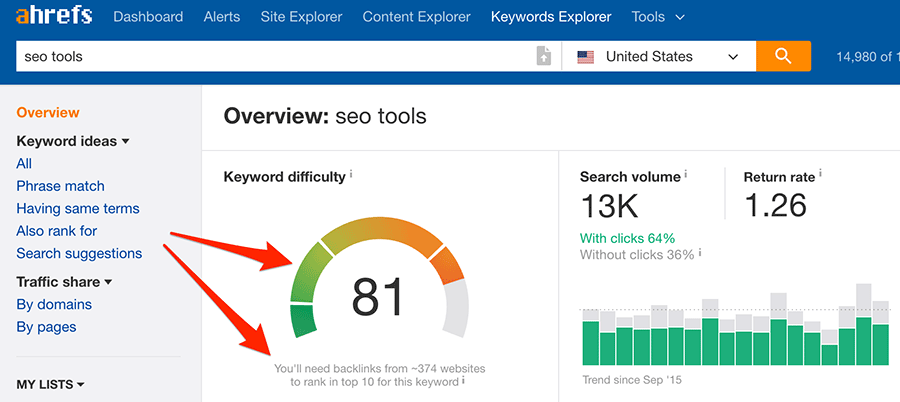
In any case, that is something that you can't do at scale for a large number of watchwords without a moment's delay. That is the reason the watchword trouble metric is so helpful.
Every catchphrase research device has their very own techniques for figuring positioning trouble score. The one we have at Ahrefs depends on the backlink profiles of the top10 positioning pages for a given catchphrase. The greater quality backlinks they have, the harder it would be for you to outrank them.
One significant thing to think about Cost Per Click is that it is considerably more unstable than Search volume. While quest interest for a catchphrase varies on a month to month premise, its CPC can change essentially any moment.
In this way, the CPC esteems that you find in outsider catchphrase research devices are only a depiction of a certain time span. In the event that you need to get the real information, you need to utilize AdWords.
So you have produced a huge amount of promising catchphrase thoughts and utilized the previously mentioned measurements to distinguish the absolute best ones.
Presently it's an ideal opportunity to carry some structure to your rundown.
The times of focusing on one catchphrase with one page are a distant memory. Presently SEO experts are confronting a fresh out of the plastic new battle:
Would it be advisable for me to focus on a lot of pertinent points with one page or make a different page for each arrangement of watchwords?
We realize that one page can rank for hundreds (if not thousands) of significant watchwords. In any case, what amount is excessively? Also, how would you know which catchphrases fit your point and which don't?
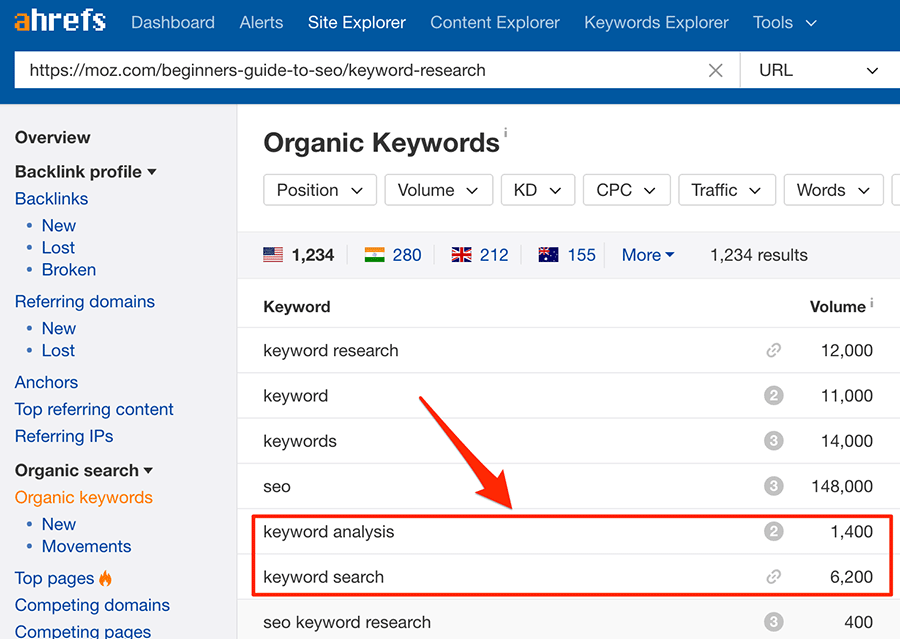
The manner in which we approach it here at Ahrefs is by taking a gander at the catchphrases that the top-positioning pages for our objective watchword effectively rank for.
For instance, the principle watchword of this very article is (clearly) "catchphrase research." And I need to realize what other applicable watchwords I can likewise rank for alongside it.
Behind each search question that individuals put into Google, there's a sure (and customarily quite certain) desire. You will probably interpret that desire forthright, so you could manufacture a page that would consummately coordinate it.
This could be very testing now and again. How about we take a catchphrase, "roses," for instance. What's the searchers' purpose behind it? Undoubtedly it's one of these two:
The most ideal method for translating aim behind the inquiry question is to google it and see what comes up first. Google is showing signs of improvement and better in distinguishing the purpose behind each search inquiry, so the query items for the most part talk for themselves.
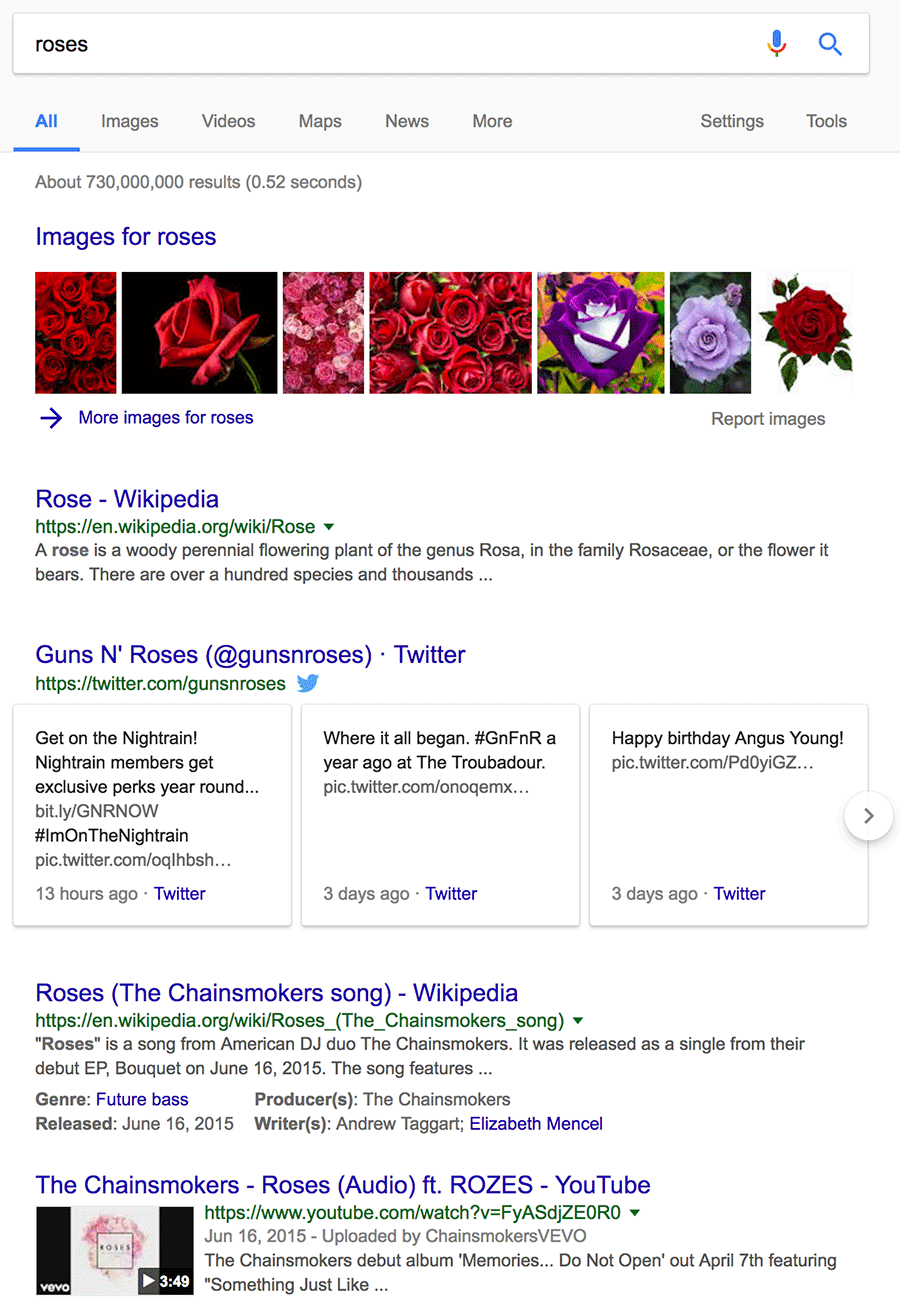
The SERP above serves both these aims with a picture strip, trailed by a Wikipedia connect.
In any case, at that point you get Guns'N'Roses Twitter profile and a tune by The Chainsmokers. What are they doing in the list items for the watchword "roses"?
All things considered, it would seem that Google has distinguished that it's what individuals searching for the watchword "roses" need to see.
When you figure the goal behind your catchphrases, you should delineate to the phase of the business cycle that it speaks to:
The visual cues above are only one of the numerous ways various advertisers guide out the alleged "Purchasers' Journey." Here's an elective take a gander at it:
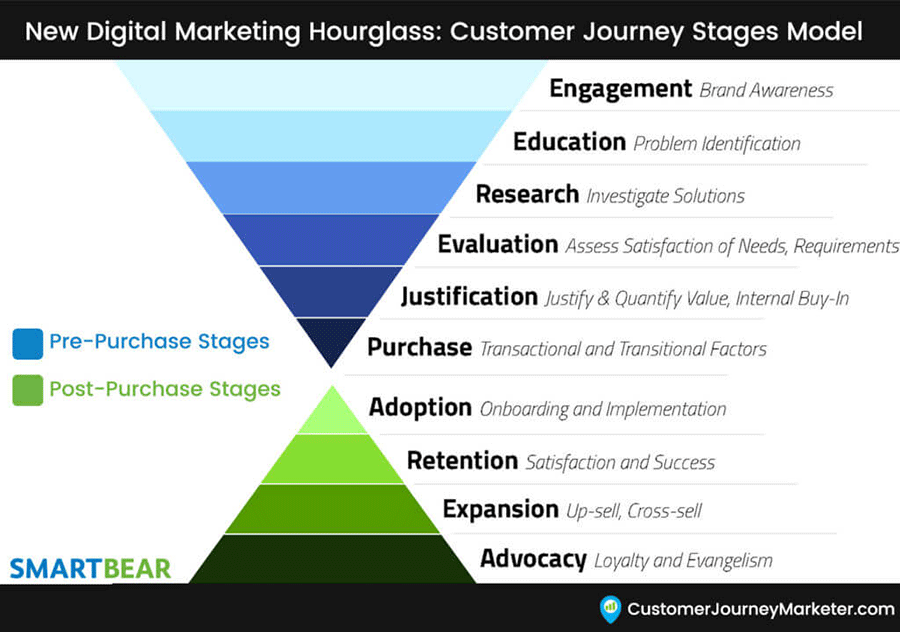
Regardless of whether you need to delineate watchwords to any of the current models or think of your own one of a kind one is completely up to you. For instance, Everett Sizemore from GoInflow.com proposes mapping catchphrases/subjects to client personas. Look at his free layout here.
My proposal is stick with whatever bodes well for you.
In case you're primarily searching for traffic and brand mindfulness, you may concentrate on catchphrases that will bring huge amounts of guests yet won't really change over into leads or deals.
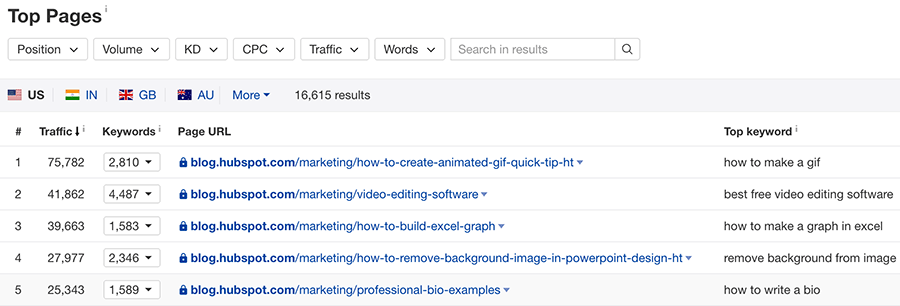
There are huge amounts of individuals searching for "how to make a gif," and HubSpot is producing practically 100k guests from that solitary article alone.
In any case, how hard would it be to change over somebody hoping to make a gif into purchasing a somewhat mind boggling promoting programming like the one that HubSpot sells?
Extremely hard.
On the off chance that you have boundless showcasing spending plans, you can fire all guns on the double. Be that as it may, most organizations can't bear the cost of this extravagance, so they need to contemplate which watchwords will drive their business and which ones will just drive their vanity measurements.
More often than not, advertisers will concentrate on watchwords with business aim, as these are the ones that drive deals and develop your business. In the event that you don't have a clue how to distinguish these catchphrases, here's a quite cool guide.
Prioritization isn't generally the "last advance" in your catchphrase research process, but instead something you do normally as you travel through the previously mentioned advances.
While you're creating watchword thoughts, dissecting their measurements, and gathering them, you ought to take note of the accompanying things:
You can go similarly as including devoted segments in your watchword look into spreadsheet to offer scores to every catchphrase thought. At that point, in light of these scores, it ought to be genuinely simple to pick the "low hanging natural product" with the best ROI.
Continuously recall, it's not the "most effortless to rank for" watchwords that you ought to search for. It's the ones with the best ROI.
I attempted my best to distil all that I think about catchphrase examination into a solitary, genuinely short (just 4300 words) direct. What's more, my essential objective with it was to spread out a procedure that could be generally appropriate to any site or industry.
There's clearly more to catchphrase investigate than that. So I couldn't imagine anything better than to pass the mic to you folks and young ladies and have you share a portion of your preferred tips and deceives that you didn't see me notice in this guide.
We should gain from one another!
There's likewise no lack of extraordinary articles that give you itemized guidelines as to executing an expert catchphrase inquire about, positioning high for a large number of focused hunt terms and incomprehensibly improving your traffic from Google.
Be that as it may, here's an intriguing perception: every one of these aides will give you a to some degree distinctive arrangement of guidelines.
Not unreasonably any of them is exhorting you wrong, it's simply there's no all inclusive way to deal with executing watchword investigate.
It will fluctuate dependent on:
- Your site (specialist, number of pages, nature of substance, and so forth);
- Your objectives and destinations (marking, presentation, traffic, drives, deals);
- Your financial limit, assets and due dates;
- Your industry and aggressive scene.
This is the reason you may think that its difficult to identify with an irregular well ordered guide that you unearth.
So I'm going to take an alternate course and give you a watchword inquire about system that can be effectively changed in accordance with whatever your objectives and assets are.
Furthermore, I ensure that the strategies and techniques portrayed underneath will boundlessly improve your traffic from Google.
In any event we've developed pursuit traffic to this very blog by 2.4x in one year by doing it:
1. Start with seed keywords
Seed watchwords are the establishment of your catchphrase look into. They characterize your specialty and help you recognize your rivals.
On the off chance that you as of now have an item or business that you need to advance web based, concocting seed catchphrases is as simple as portraying that item with your very own words or conceptualizing how other individuals may scan for it.
For instance, suppose you're propelling an online store with GoPro adornments. The Google look (catchphrases) that you would initially consider are:
GoPro adornments;
devices for GoPro;
GoPro additional items.
That is an easy decision, isn't that so?
However, imagine a scenario in which you're hoping to begin a subsidiary showcasing site, and you have no clue which specialty to pick or which items to advance.
The test of "picking a specialty" merits a major and point by point guide of its own. Be that as it may, for the most part, there are two different ways to approach this:
1. “Monetisation first” approach
For instance, Amazon has an amazingly famous offshoot program. So you should simply peruse their site until you find an item (or a class of items) that you're willing to advance.
Another choice is to scout offshoot commercial center locales like ClickBank or CJ, that associate item proprietors with members.
Lastly, simply survey the items and administrations that you're utilizing yourself and check whether you can turn into a subsidiary.
2. “Niche down” approach
You can begin with an overly expansive catchphrase and specialty down until you see an intriguing chance.
For instance, I'm going to pick "music" as my too expansive specialty. Ahrefs' Keywords Explorer instrument gives me very nearly 5 million watchword thoughts for that seed catchphrase:
So as to "specialty down," I have to concentrate on longer and increasingly explicit catchphrases that have "music" in them. So I will utilize the "Words" channel to limit that enormous rundown of catchphrase thoughts to those with precisely 4 words.
What's more, this is what I had the option to discover:
- "music making programming free" — Being an ex-DJ, I know there's a huge amount of programming for making music. So I could begin an audit site and spread all the most recent discharges and updates.
- "round of positions of authority music" — People need to download music they hear in motion pictures, TV arrangement, TV appears, and so forth. Also, given that new TV substance is discharged routinely, this could be a fun specialty.
- "presents for music darlings" — I'm certain a ton of celebrated music groups and driving music marks have a huge amount of product for their fans to purchase. Also melodic instrument brands like Gibson, Fender, and so forth. They should have some moderate blessing alternatives as well.
- "music games for children" — Being a dad of a 8‑month-old child, I would absolutely play some fun music games with him.
These specialty thoughts are clearly a long way from flawless, however hello, I spent close to 5 minutes to discover them. Contribute somewhat additional time and you'll definitely unearth something great.
1. Generate keyword ideas
So you have your seed catchphrases made sense of. In any case, that is just the tip of the catchphrase investigate chunk of ice.
The subsequent stage is to create a mammoth rundown of applicable watchword thoughts, while likewise getting a decent comprehension of what individuals in your specialty are looking for in Google.
There are at any rate four great approaches to do it.
1. See what keywords you already rank for
In the event that you claim a site that has been around for some time, you should as of now be positioning in Google for a couple of hundred watchwords. Realizing what they are is an ideal method to kick-begin your watchword investigate.
A decent wellspring of this data is a report called "Search Analytics" in Google Search Console:
Search Console demonstrates your normal position for every one of the catchphrases you rank for and what number of impressions and snaps this brings you. Be that as it may, they don't demonstrate the month to month search volume and you're constrained to 1000 catchphrases as it were.
2. See what keywords your competitors are ranking for
The odds are, your rivals have just played out all the dull catchphrase research work for you. So you can look into the catchphrases that they rank for and single out the best ones.
On the off chance that you don't have the foggiest idea who your rivals are, simply put your seed catchphrases into Google and see who positions on the first page.
We should do that with a seed watchword that I found before, "presents for music darlings." I see a fascinating site positioning on the first page, uncommongoods.com.
How about we presently plug that site in Ahrefs' Site Explorer and peruse the watchwords that it positions for:
At times even a solitary contender can supply you with enough catchphrase thoughts to keep your SEO group occupied for a considerable length of time. Be that as it may, in case you're ravenous for additional, you can go to "Contending spaces" report to discover more locales like your rival.
Also, we've quite recently shut the "focused research circle":
- Put your seed watchword into Google and see who positions on top;
- Fitting their site into Ahrefs to see their best catchphrases;
- Discover progressively important sites through the "Contending areas" report;
- Return to either stage 1 or 2.
The secret to practically boundless catchphrase thoughts is to rehash this procedure again and again.
What's more, don't disregard taking advantage of related businesses. You may find a ton of incredible catchphrases that don't really identify with whatever you're offering however can in any case carry very focused on guests to your site.
3. Use keyword research tools
Great contender research is frequently enough to fill your spreadsheet with a huge amount of significant catchphrase thoughts.Yet, in case you're one of the pioneers in your specialty, that methodology isn't exactly achievable for you. You must search for some exceptional watchwords that none of your rivals are focusing on yet.
Furthermore, the most ideal approach to do it is by utilizing an OK watchword research device. Fortunately, there's no lack of them available:
- http://soovle.com/
- https://ubersuggest.io/
- http://answerthepublic.com/
- and many more
Notwithstanding the instrument you pick, there's no favored work process for discovering incredible watchword thoughts. Simply enter your seed watchwords and play with the reports and channels until you discover something cool.
Most devices will pull their watchword recommendations from the accompanying sources:
- scratching watchword thoughts legitimately from Google Keyword Planner;
- scratching Google auto-propose;
- scratching "comparative inquiries" in Google.
These techniques are incredible, however they can once in a while give you in excess of two or three hundred proposals. For instance, UberSuggest demonstrates just 316 watchword thoughts for "content promoting."
There are likewise best in class watchword research apparatuses (Ahrefs, Moz, SEMrush) that work their very own catchphrase database and in this way will give you tremendously more watchword thoughts.
You can without much of a stretch go bananas attempting to filter through a catchphrase rundown of that size, so we have some incredible separating alternatives set up:
- Watchword trouble;
- Search volume;
- Snaps;
- Snaps per search;
- Cost per click;
- Return rate;
- Number of words in a watchword;
- Incorporate/Exclude terms.
On the off chance that you need to get familiar with producing watchword thoughts by means of Ahrefs' Keywords Explorer, look at my full survey of this device.
RECOMMENDATION
"Google Keyword Planner is the most horrible apparatus that you can use for producing watchword thoughts. That is on the grounds that it is appropriate for promoters, not SEOs. Test GKP against some other watchword research instrument and you'll perceive how restricted their catchphrase recommendations are."
4. Study your niche well
The previously mentioned catchphrase look into methodologies are incredibly powerful and give a practically boundless measure of watchword thoughts. And yet, they sort of keep you "in the crate."
Once in a while, just by examining your specialty well (and including a touch of presence of mind), you can find some extraordinary watchwords that nobody in your specialty is focusing on yet.
Here's the manner by which to kickstart "out of the case" thinking:
- Get in the shoes of your potential clients: what their identity is and what disturbs them;
- Converse with your current clients, become more acquainted with them better, study the language they use;
- Be a functioning member in the entirety of your specialty networks and informal organizations.
For instance, in case you're selling waterproof earphones, here are a portion of the "out of the crate" catchphrases you may take a stab at focusing on:
- step by step instructions to endure a hard swim practice;
- the most effective method to make swim practice pass by quicker;
- what do you make of when swimming;
- best swimming style for long separation;
- lessen water obstruction swimming.
Individuals scanning for these things are not really hoping to purchase waterproof earphones, yet they ought to be genuinely simple to offer to.
We as of late composed a quite definite article about this catchphrase explore system: 4 Ways to Find Untapped Keyword Ideas With Great Traffic Potential.
What's more, I truly appreciated the counsel offered by Dan Petrovic here: Advanced New Tail Keyword Research.
3. Understand keyword metrics
While executing the previously mentioned procedures, you'll wind up filtering through a large number of watchword thoughts and attempting to choose which of them have the right to be shortlisted.What's more, to enable you to isolate the good product from the debris, there's a lot of cool watchword measurements to consider.
1. Search volume
This measurement demonstrates to you the general hunt request of a given watchword, i.e., how often individuals around the globe (or in a particular nation) put this catchphrase into Google.
The greater part of the catchphrase research instruments pull their Search volume numbers from Google AdWords, which was for some time viewed as a confided in wellspring of this information.
In any case, not any longer. For as long as couple of years, Google has been reliably removing information from SEOs:
- Google Keyword Planner's Dirty Secrets
- Perspiring the Details – Rethinking Google Keyword Tool Volume
In any case, this time, we had the option to pull off a cool workaround – clickstream information.
By displaying numbers from GKP against clickstream information, we're ready to concoct substantially more exact pursuit volumes and un-bunch watchwords that have comparable significance.
Something else to consistently remember is the dynamic idea of Search volume.
For instance, a catchphrase like "christmas presents" will normally spike around Christmas time while having just about zero hunt volume during the remainder of the year.
To check the pursuit volume pattern of a catchphrase you can utilize a free instrument called Google Trends:
So the pursuit volume is essentially a yearly normal. Furthermore, in case you're in uncertainty about the "regularity" of a catchphrase, make a point to check the patterns.
Be that as it may, there's one issue with pursuit volume. It doesn't in every case precisely foresee the inquiry traffic.
2. Clicks
We should take a watchword, "donald trump age," that has a hunt volume of 246,000 pursuits for every month (as per Google Keyword Planner).
That colossal hunt request infers that you should get a huge measure of traffic on the off chance that you rank at the highest point of Google for that watchword. Be that as it may, we should perceive what the list items resemble:
A decent amount of Google's land is taken by a moment answer to that search question: 70 years.
So does it at any point bode well to click anything now?
Not a chance:
These "extraordinary" query items are known as "SERP highlights" and there are many various kinds of them:
- information cards;
- highlighted scraps;
- top stories;
- nearby packs;
- shopping results;
- picture packs, and so on.
Some of them will inconceivably improve search traffic to your site, yet others will take it away from you.
On the above screen capture from Ahrefs' Keywords Explorer, you can see that 86% of scans for "donald trump age" don't bring about any snaps on the query items. All since searchers are given a moment answer through a Knowledge card.
The Clicks metric is absolutely priceless in getting rid of the hunt questions with enormous inquiry request however hopeless traffic. Also, we're glad to be the main instrument available to have this measurement.
We're likewise ready to demonstrate to you what number of the snaps get "stolen" via search promotions:
On the above screen capture, you can see that a decent amount of snaps for "remote earphones" go to look through promotions, while clicks for "best remote earphones" are for the most part natural.
3. Traffic potential
Search volume and Clicks are incredible measurements to comprehend the prevalence and traffic of a solitary catchphrase. However, that catchphrase may have a huge amount of equivalent words and related pursuits, which can all be focused with a solitary page on your site.
Give me a chance to clarify what I mean with a model. The watchword "I'm sorry blooms" doesn't look encouraging as far as hunt request or traffic:
The #1 positioning outcome typically gets close to 30% everything being equal. This implies you can seek after around 60 visits for each month on the off chance that you rank #1 for the watchword "I'm sorry blooms."
Also, that is somewhat of a demoralizing projection, correct?
Be that as it may, how about we take a gander at how much inquiry traffic the #1 positioning page for "I'm sorry blooms" watchword really gets:
On the above screen capture, you can see that it is pulling in right around 300 guests from Google for every month. That is on the grounds that it positions for 48 distinct catchphrases, and not simply "I'm sorry blossoms" watchword alone.
We've been supporting the significance of long-tail traffic for a long time (here, here, and here), yet it doesn't damage to pressure it once more.
Individuals look for very similar things in a wide range of curious ways. So a solitary page on your site can possibly rank for hundreds (if not thousands) of related watchwords.
So it's an ideal opportunity to quit assessing watchwords just by their Search volume (or Clicks) alone. You have to take a gander at the top-positioning outcomes and perceive how much inquiry traffic they get altogether.
4. Keyword Difficulty
I have secured that entire procedure, all the way, in a different article: How To Gauge Keyword Difficulty And Find The Easiest Keywords To Rank For.
In any case, that is something that you can't do at scale for a large number of watchwords without a moment's delay. That is the reason the watchword trouble metric is so helpful.
Every catchphrase research device has their very own techniques for figuring positioning trouble score. The one we have at Ahrefs depends on the backlink profiles of the top10 positioning pages for a given catchphrase. The greater quality backlinks they have, the harder it would be for you to outrank them.
5. Cost Per Click
This measurement is for the most part significant for promoters as opposed to SEOs. Be that as it may, numerous SEO experts treat CPC as a sign of catchphrases' business plan (which really bodes well).One significant thing to think about Cost Per Click is that it is considerably more unstable than Search volume. While quest interest for a catchphrase varies on a month to month premise, its CPC can change essentially any moment.
In this way, the CPC esteems that you find in outsider catchphrase research devices are only a depiction of a certain time span. In the event that you need to get the real information, you need to utilize AdWords.
4. Group your list of keywords
So you have produced a huge amount of promising catchphrase thoughts and utilized the previously mentioned measurements to distinguish the absolute best ones.
Presently it's an ideal opportunity to carry some structure to your rundown.
1. Group by “parent topic”
The times of focusing on one catchphrase with one page are a distant memory. Presently SEO experts are confronting a fresh out of the plastic new battle:
Would it be advisable for me to focus on a lot of pertinent points with one page or make a different page for each arrangement of watchwords?
We realize that one page can rank for hundreds (if not thousands) of significant watchwords. In any case, what amount is excessively? Also, how would you know which catchphrases fit your point and which don't?
The manner in which we approach it here at Ahrefs is by taking a gander at the catchphrases that the top-positioning pages for our objective watchword effectively rank for.
For instance, the principle watchword of this very article is (clearly) "catchphrase research." And I need to realize what other applicable watchwords I can likewise rank for alongside it.
2. Group by intent
So you have assembled semantically related watchwords by "parent subject" and mapped them to various pages of your site. The subsequent stage is to gather these "pages" by the alleged "searchers' aim."Behind each search question that individuals put into Google, there's a sure (and customarily quite certain) desire. You will probably interpret that desire forthright, so you could manufacture a page that would consummately coordinate it.
This could be very testing now and again. How about we take a catchphrase, "roses," for instance. What's the searchers' purpose behind it? Undoubtedly it's one of these two:
- See a few pictures of roses.
- Get familiar with this bloom.
The most ideal method for translating aim behind the inquiry question is to google it and see what comes up first. Google is showing signs of improvement and better in distinguishing the purpose behind each search inquiry, so the query items for the most part talk for themselves.
The SERP above serves both these aims with a picture strip, trailed by a Wikipedia connect.
In any case, at that point you get Guns'N'Roses Twitter profile and a tune by The Chainsmokers. What are they doing in the list items for the watchword "roses"?
All things considered, it would seem that Google has distinguished that it's what individuals searching for the watchword "roses" need to see.
When you figure the goal behind your catchphrases, you should delineate to the phase of the business cycle that it speaks to:
- Uninformed;
- Issue mindful;
- Arrangement mindful;
- Item mindful;
- Completely mindful.
The visual cues above are only one of the numerous ways various advertisers guide out the alleged "Purchasers' Journey." Here's an elective take a gander at it:
Regardless of whether you need to delineate watchwords to any of the current models or think of your own one of a kind one is completely up to you. For instance, Everett Sizemore from GoInflow.com proposes mapping catchphrases/subjects to client personas. Look at his free layout here.
My proposal is stick with whatever bodes well for you.
3. Group by business value
This gathering is entirely identified with gathering by plan. Be that as it may, this time, you have to make sense of which plan drives the best ROI for your business.In case you're primarily searching for traffic and brand mindfulness, you may concentrate on catchphrases that will bring huge amounts of guests yet won't really change over into leads or deals.
There are huge amounts of individuals searching for "how to make a gif," and HubSpot is producing practically 100k guests from that solitary article alone.
In any case, how hard would it be to change over somebody hoping to make a gif into purchasing a somewhat mind boggling promoting programming like the one that HubSpot sells?
Extremely hard.
On the off chance that you have boundless showcasing spending plans, you can fire all guns on the double. Be that as it may, most organizations can't bear the cost of this extravagance, so they need to contemplate which watchwords will drive their business and which ones will just drive their vanity measurements.
More often than not, advertisers will concentrate on watchwords with business aim, as these are the ones that drive deals and develop your business. In the event that you don't have a clue how to distinguish these catchphrases, here's a quite cool guide.
5. Prioritise
Prioritization isn't generally the "last advance" in your catchphrase research process, but instead something you do normally as you travel through the previously mentioned advances.
While you're creating watchword thoughts, dissecting their measurements, and gathering them, you ought to take note of the accompanying things:
- What is the evaluated traffic capability of this catchphrase (gathering)?
- How intense is the challenge? What might it take to rank for it?
- What number of assets ought to be put resources into structure a focused page and advancing it well?
- What's the ROI of that traffic? Does it just bring brand mindfulness or really convert into leads and deals?
You can go similarly as including devoted segments in your watchword look into spreadsheet to offer scores to every catchphrase thought. At that point, in light of these scores, it ought to be genuinely simple to pick the "low hanging natural product" with the best ROI.
Continuously recall, it's not the "most effortless to rank for" watchwords that you ought to search for. It's the ones with the best ROI.
Please share your keyword research tips
I attempted my best to distil all that I think about catchphrase examination into a solitary, genuinely short (just 4300 words) direct. What's more, my essential objective with it was to spread out a procedure that could be generally appropriate to any site or industry.
There's clearly more to catchphrase investigate than that. So I couldn't imagine anything better than to pass the mic to you folks and young ladies and have you share a portion of your preferred tips and deceives that you didn't see me notice in this guide.
We should gain from one another!
Best Tutorial Ever Thanks (Y)
ReplyDelete